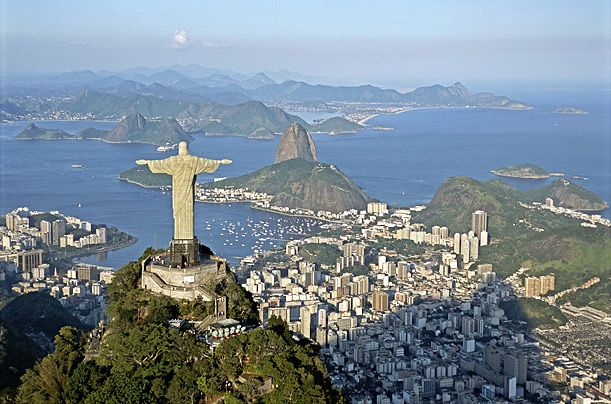
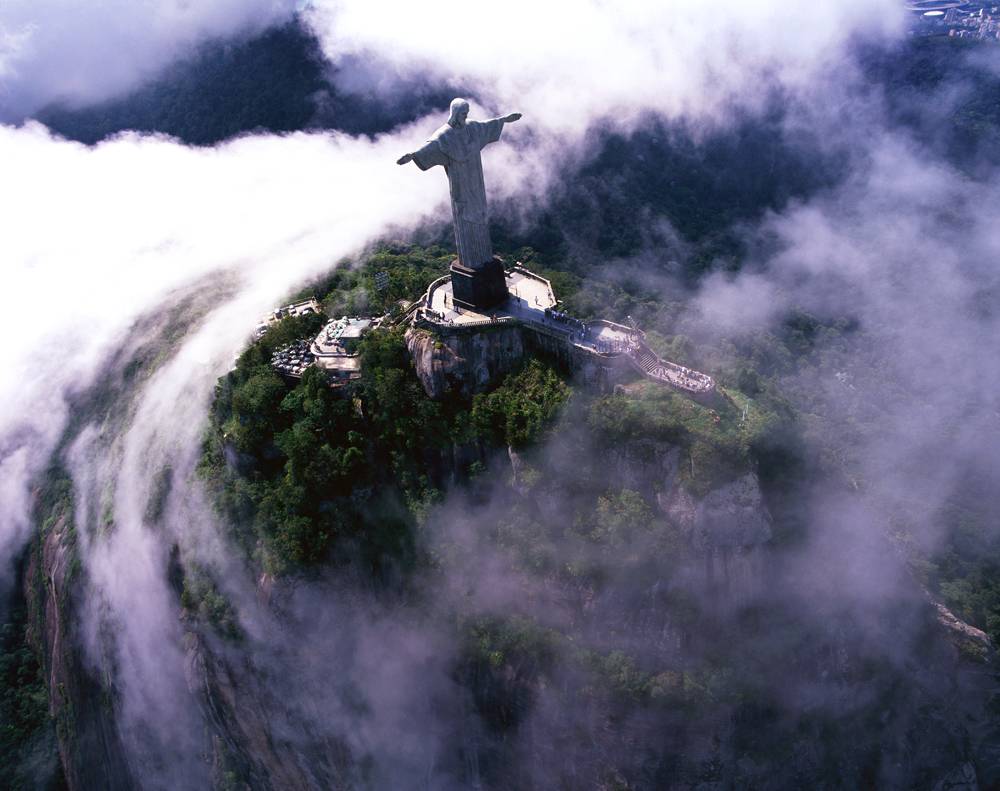
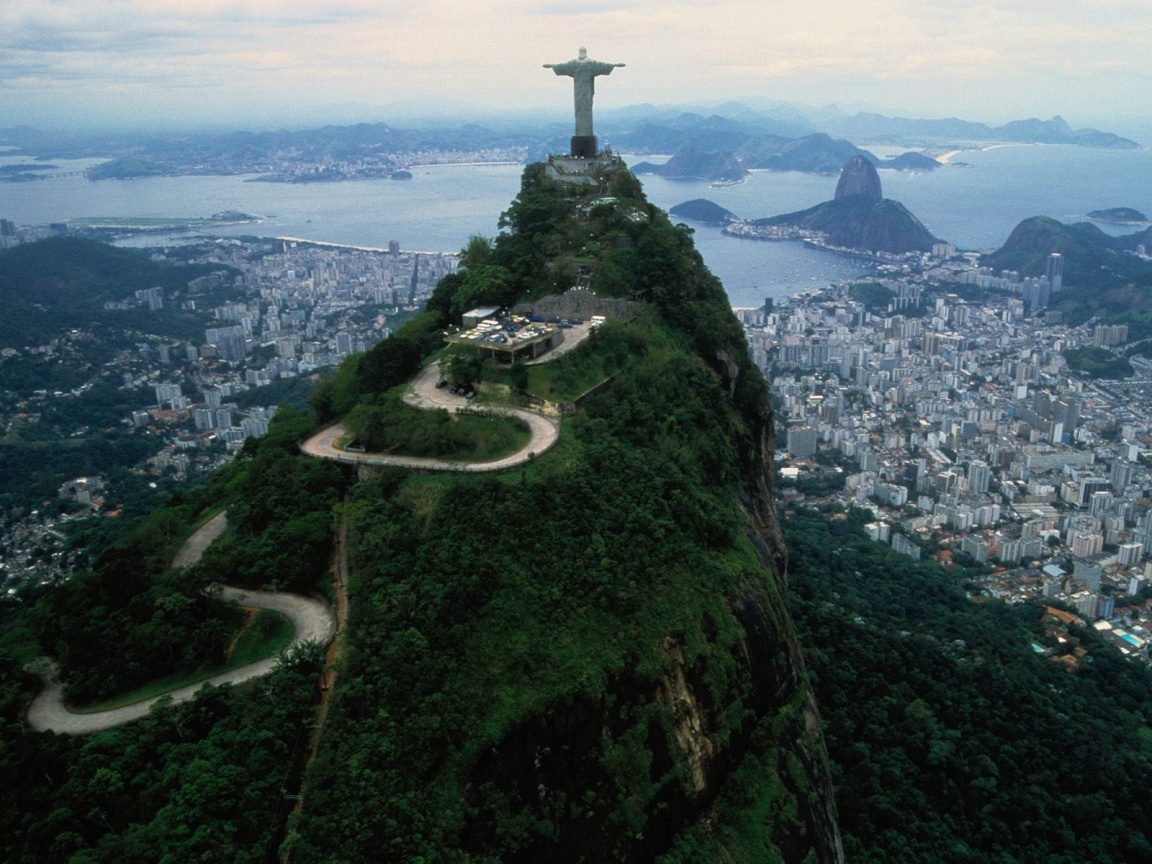
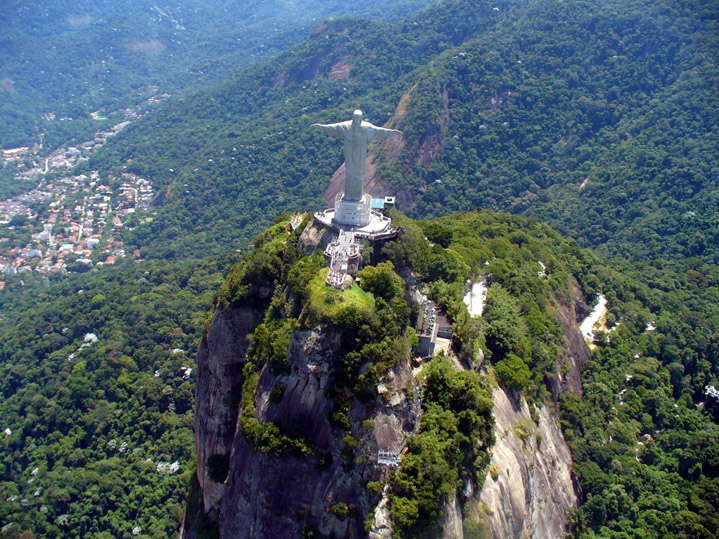
The becoming of Christ’s Saviour is a famous monument of Jesus Christ with open arms, located on top of Mount Corquad, drawn heavy in seven hundred tons and tall in 39 meters, is a true symbol of Rio-Janeiro and all Brazil in general, one of the seven wonders of the world and the location of the pilgrimage of thousands of believers.
Road to Memorial
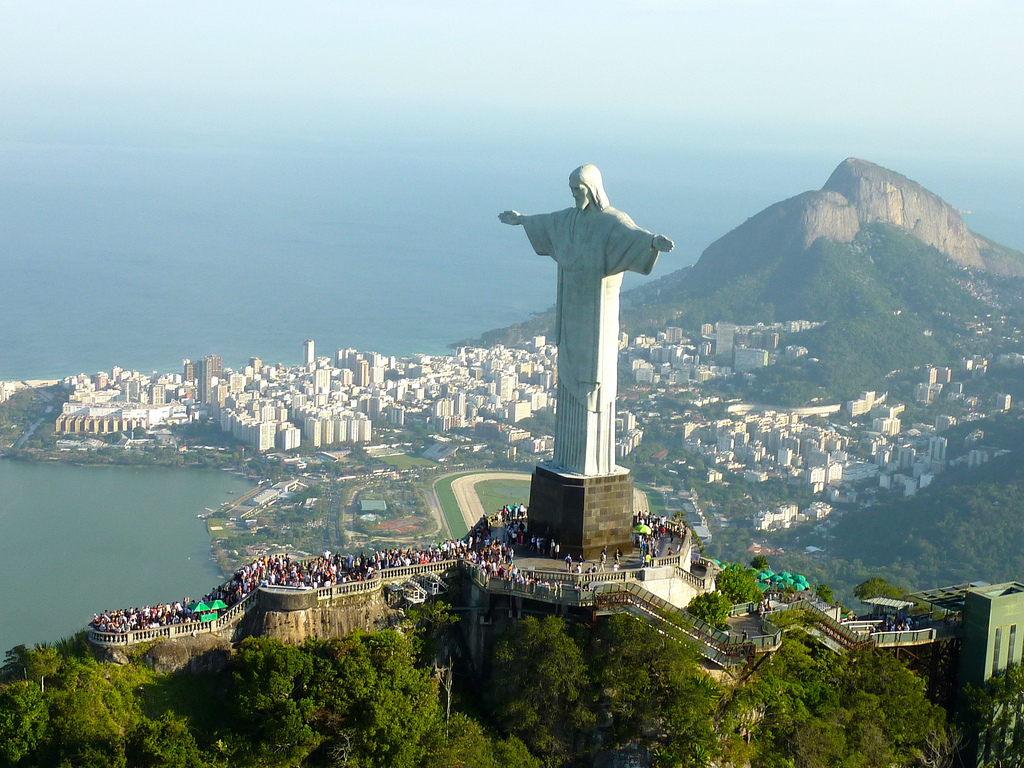
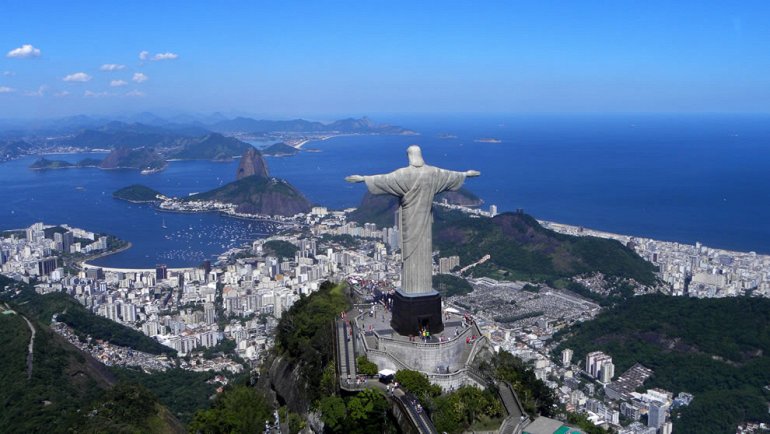
The moment in Christ’s Saviour is one of the world’s most famous and popular. Every year, at least 1.8 million tourists rise up to his foot to be mistaken for the beautiful panorama of the city and the cove, the pickled mountain of Sugar Head, the famous bottles of Copacana and Yorama, a huge cup of Maracana.
At the top leads the first one in Brazil to an electric railroad, which drives a miniature train. It was built by engineers by Peri Passus and Tersair Soarrested long before the installation of the statue of Jesus Christ. And then this railroad played an incredibly important role in the architecture of the monument, which was the one that was delivered to the building by building a building of building blocks at 17200 meters.
And you can also see the statue as a car through a freeway that goes through the Ticauk government, which is the largest forest array in the world that’s within only one city.
Content handling
In 1921, the emergence of the century of Brazil’s independence (1822) inspired the citizens of the city — the Rio-Janeiro, which was still a capital of Brazil, to create a monument for Christ the Savior. The Cruciero magazine announced a collection of funds to build a monument. The result was 2.2 million reactions. The campaign was connected and the Church was a totalitarian Archbishop of Rio-Janeiro Sebastian Leu took active participation in creating a monument.
This sculpture lasted about nine years — from 1922 to 1931.
The original monument sketch developed Carlos Oswald. He’s the one who suggested that Christ, with open arms, that seems to bless the whole people, which makes the figure look like a great cross. In the original version of the pedestal, it had to have a form of earth. The final project of the monument was developed by the Brazilian engineer of Asher de Silva Kusht.
But because of all the different reasons, including technology, it was impossible to create this huge sculpture in Brazil, and so all of its details, including the carcas, were made in France.
In 1924, a French sculptor named Paul Landowski had finished making heads and hands of statues. In a sense, all the details of the monument were delivered to Brazil and railroads were transported to the top of the mountains of Corquando. From the end of the rift to the bottom of the statue, there were these frigid steps that got the nickname “Karacal.”.
Opening and celebrating the monument
October 12, 1931, there was a celebration of discovery and sanctification of the monument that became the symbol of the Rio-Daineiro.
In 1965, the statue was reorganized by Paul VI, and in 1981 for the 50th anniversary of the monument was present by Mr. John Paul Il.
Growth in the next years
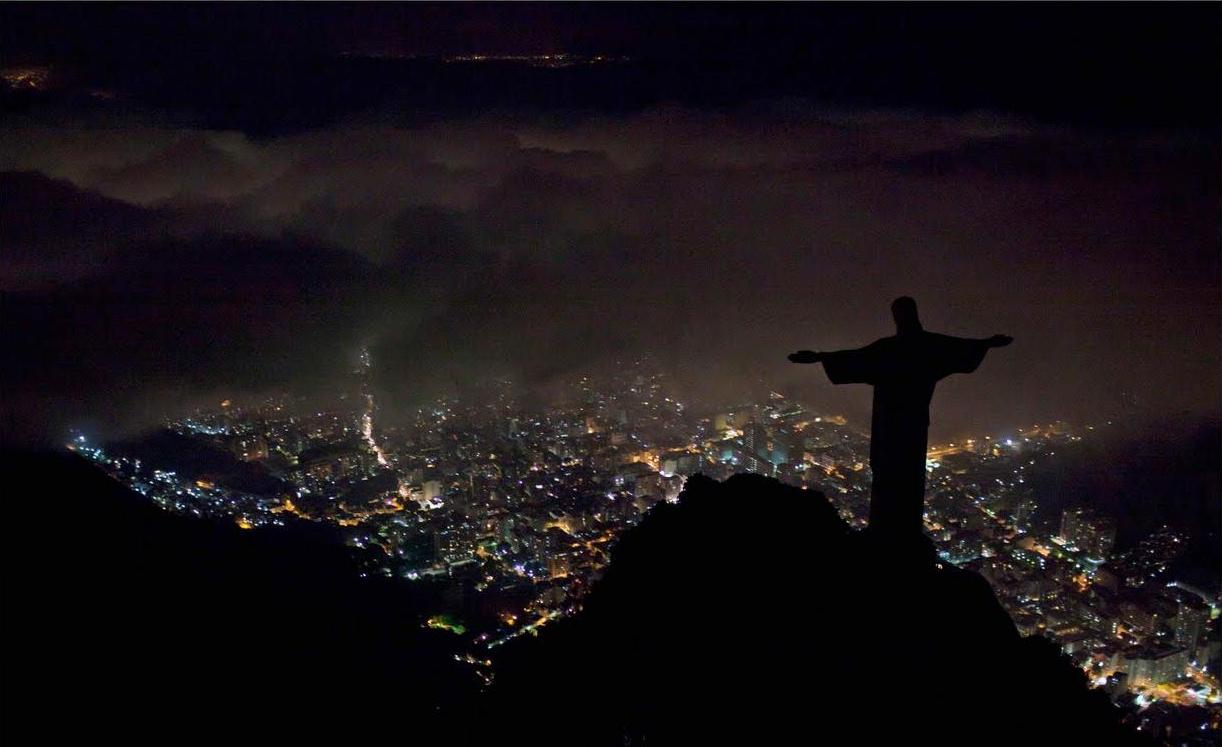
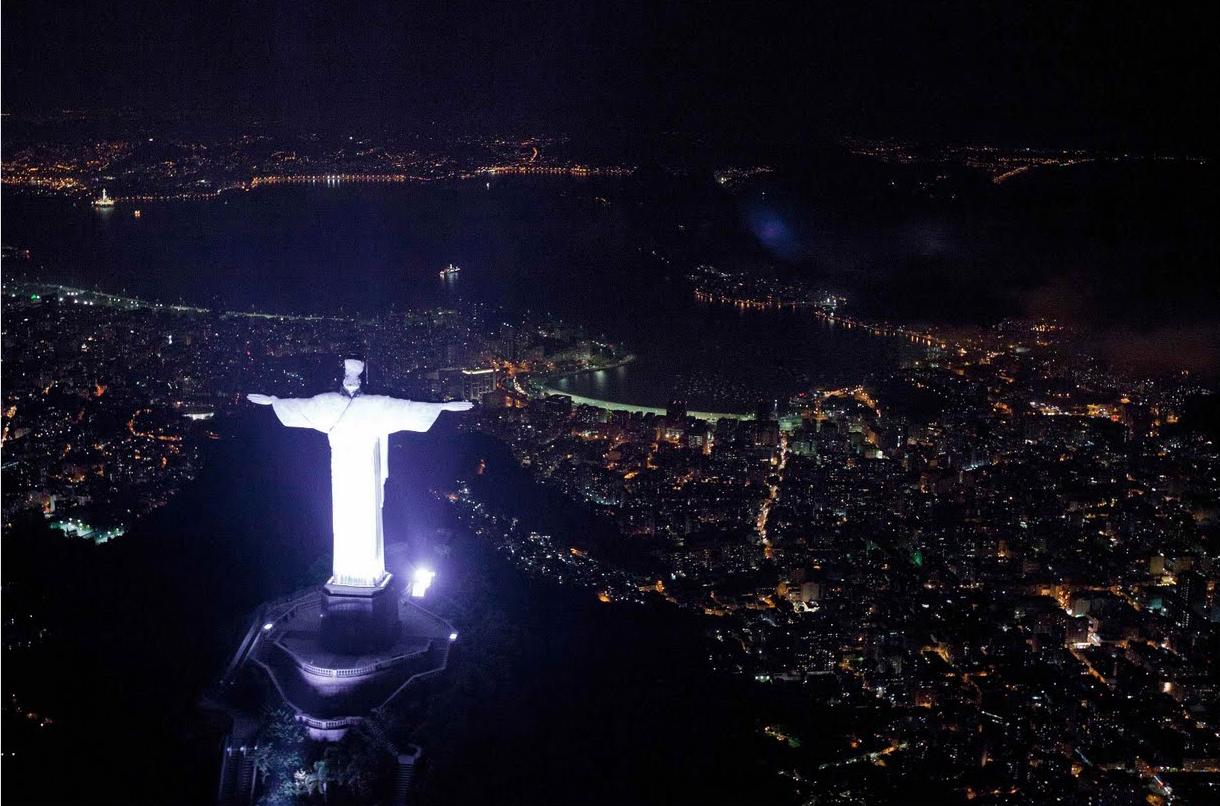
In the last 75 years, they were twice repaired — in 1980 and 1990. In 1932 and 2000, there was a modernization of the system of the night illusion. In 2003, the climb to the front floor was equipped with escalators. In 2007, the statue was chosen by one of the New Seven Wonders of light.
On October 26, 2007, the Gerrares of the Russian Orthodox Church for the first time did a perfect worship near the statue. There was a whole series of official officials and business officials who came to Rio-Janeiro within the Danish days of Russia in Latin America
 .
.